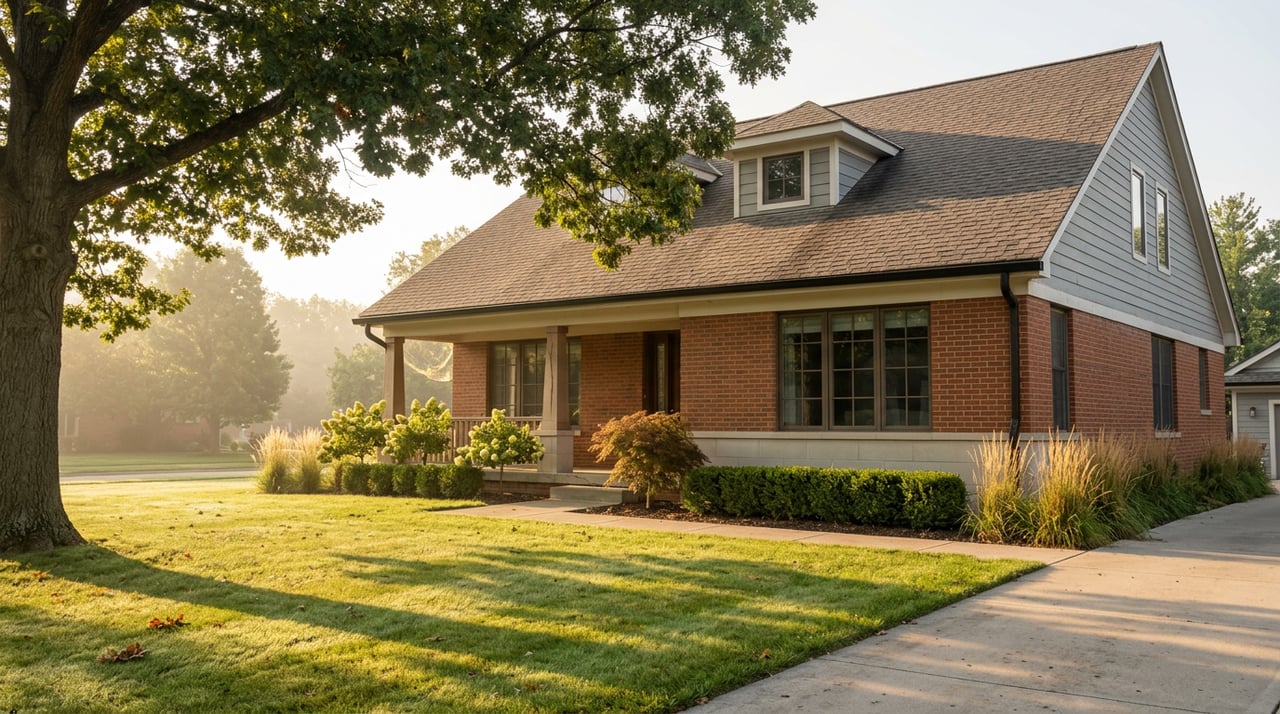
Homewood Home Prices: Why the Village Median and the Downtown Median Don't Match
September 17, 2026
September 17, 2026
A buyer comparing south suburbs pulls up Homewood's numbers first. The village-wide median sale price sat at $226,000 in March 2026, according to Redfin's most recent tracked data, down 9.44 percent from a year earlier. That's a workable starting point for anyone cross-shopping Homewood against Flossmoor, Olympia Fields, or Chicago Heights.
Then the same buyer narrows the search to "Downtown Homewood" and the median drops to $178,000 over the three months ending March 2026, a 25.6 percent year-over-year decline. Price per square foot tells the same story: $161 village-wide, up 8.1 percent year-over-year, against $145 in the downtown polygon, down 6.5 percent. That's not a rounding difference. That's two markets carrying one name, and a buyer who doesn't know why will either overpay for a starter bungalow near the tracks or walk away from a legitimate deal thinking something is wrong with it.
Nothing is wrong with it. The gap is zoning, not decline.
Homewood's own planning department published a plain-language zoning primer that maps almost perfectly onto the price split. Most of the village's single-family housing sits in one of two residential districts, and the difference between them is lot size and home size, not desirability.
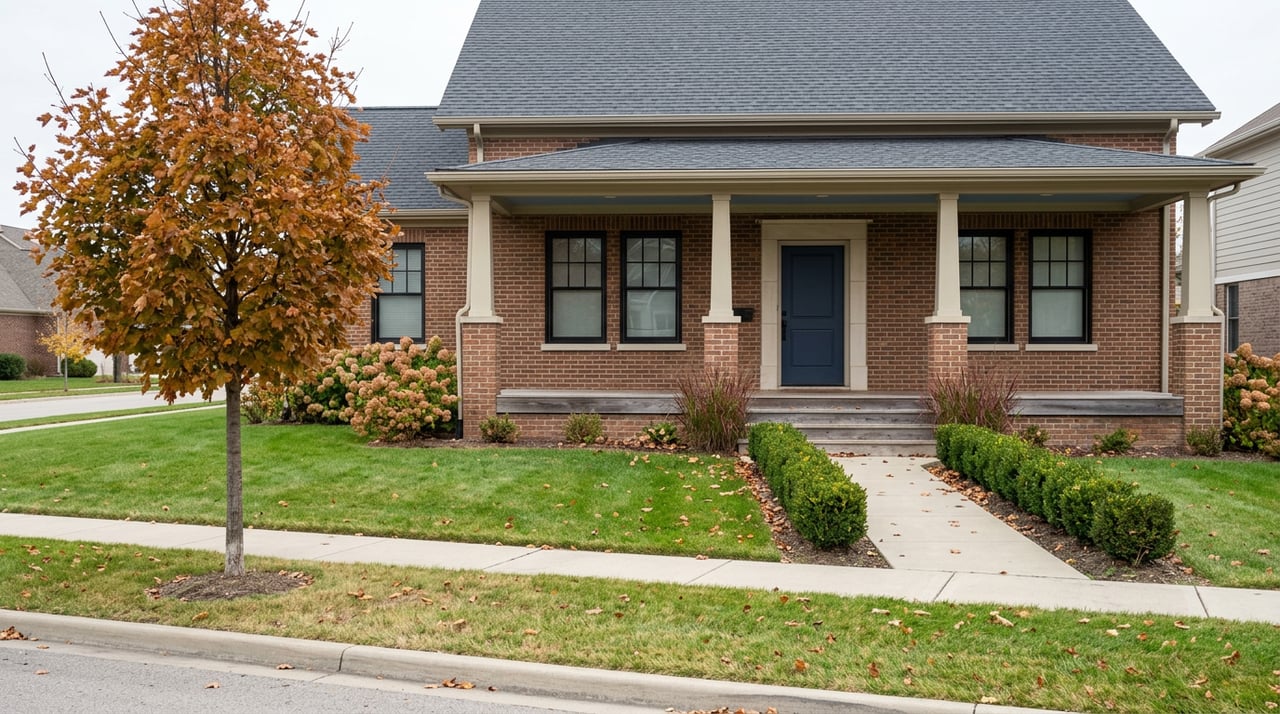
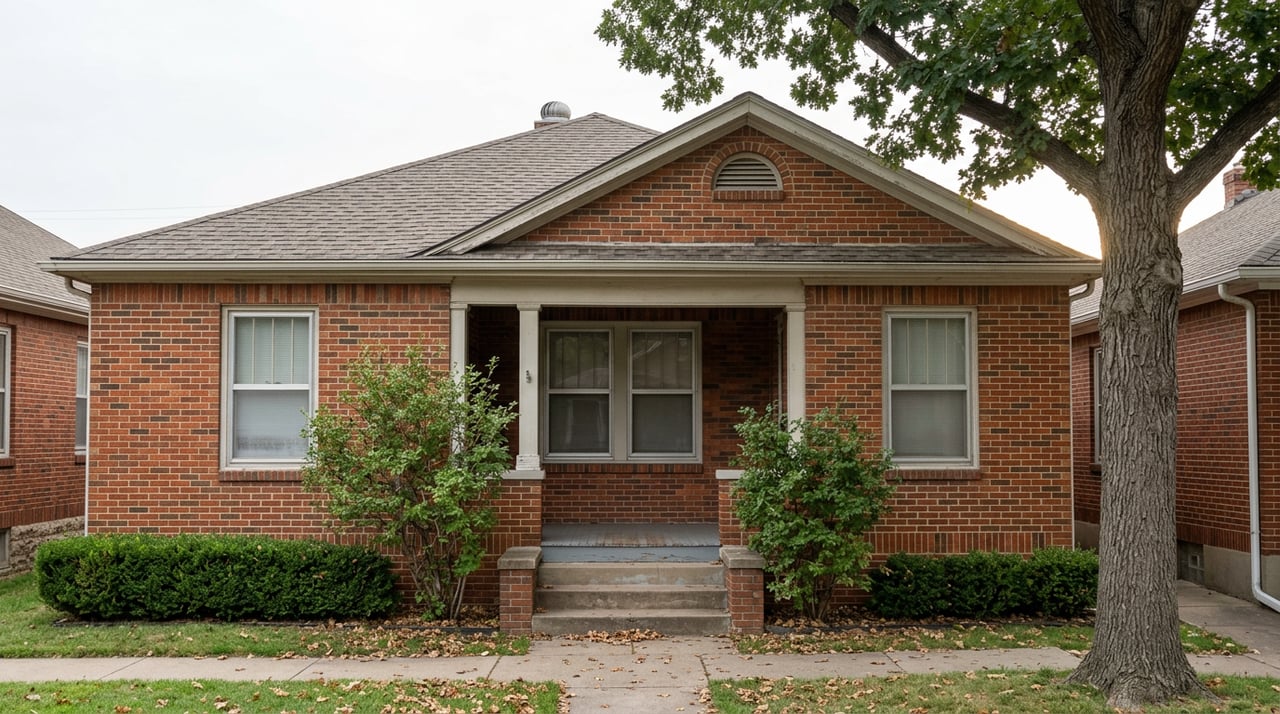
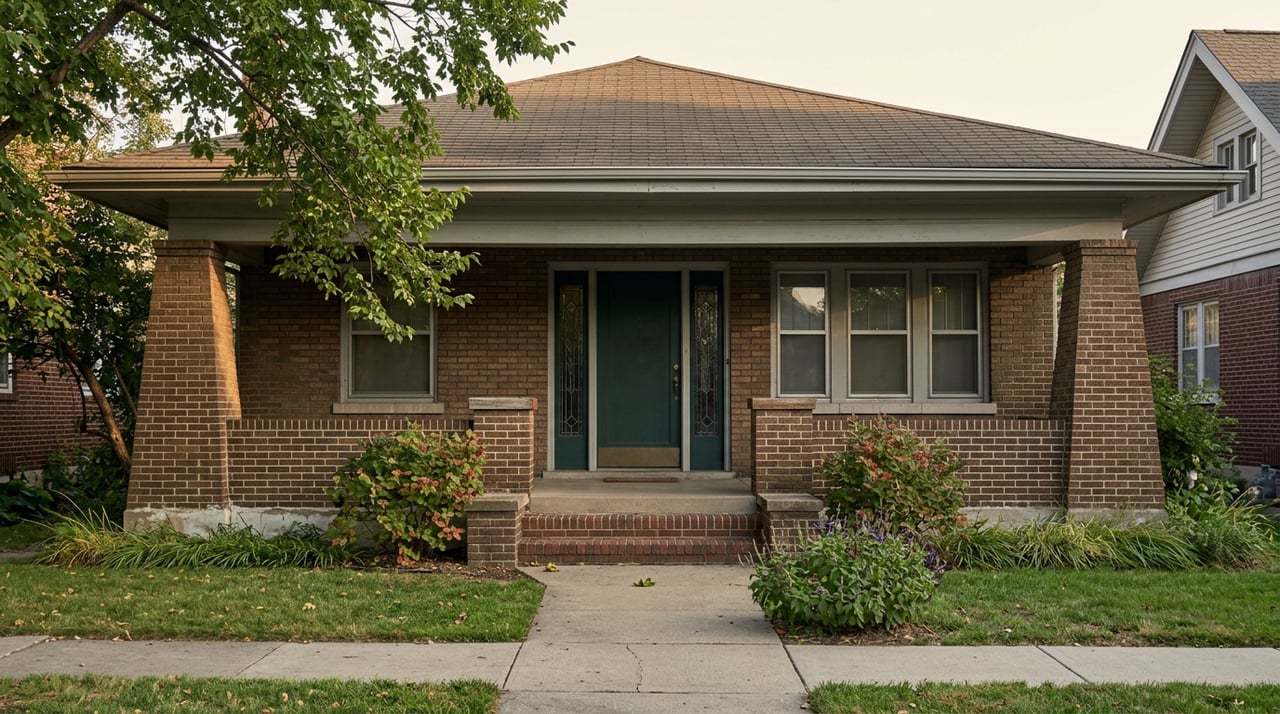
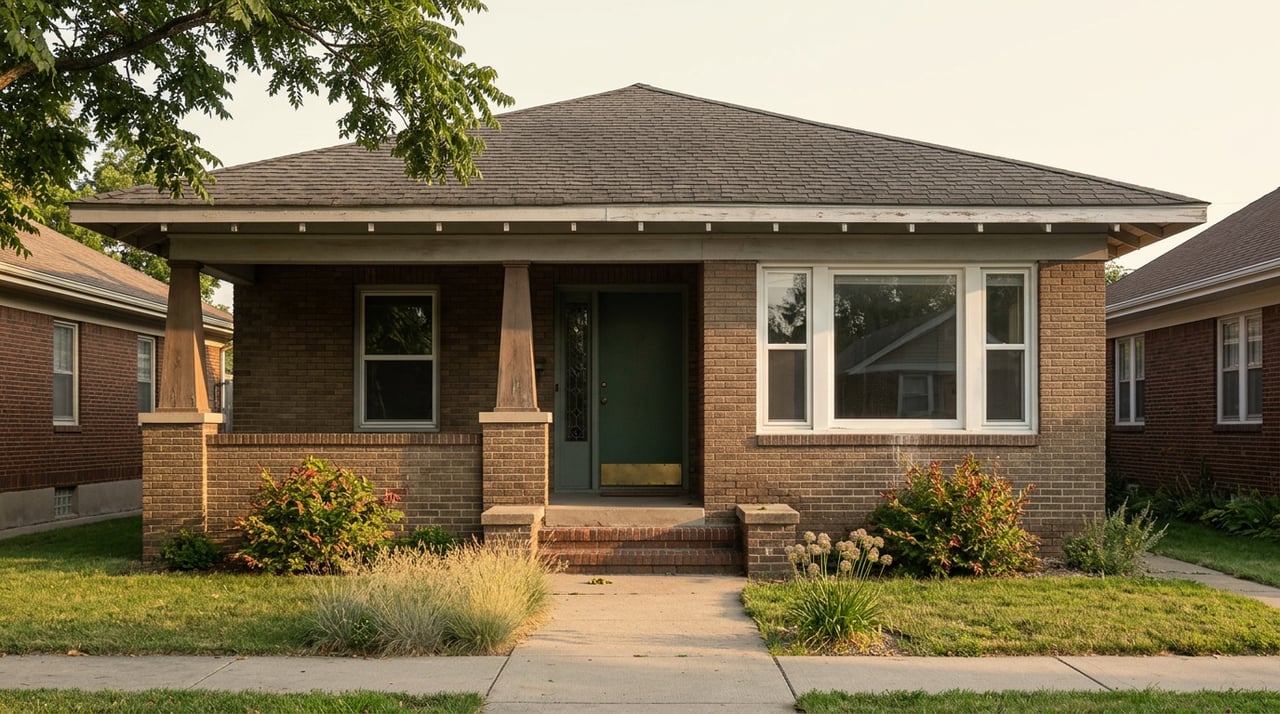
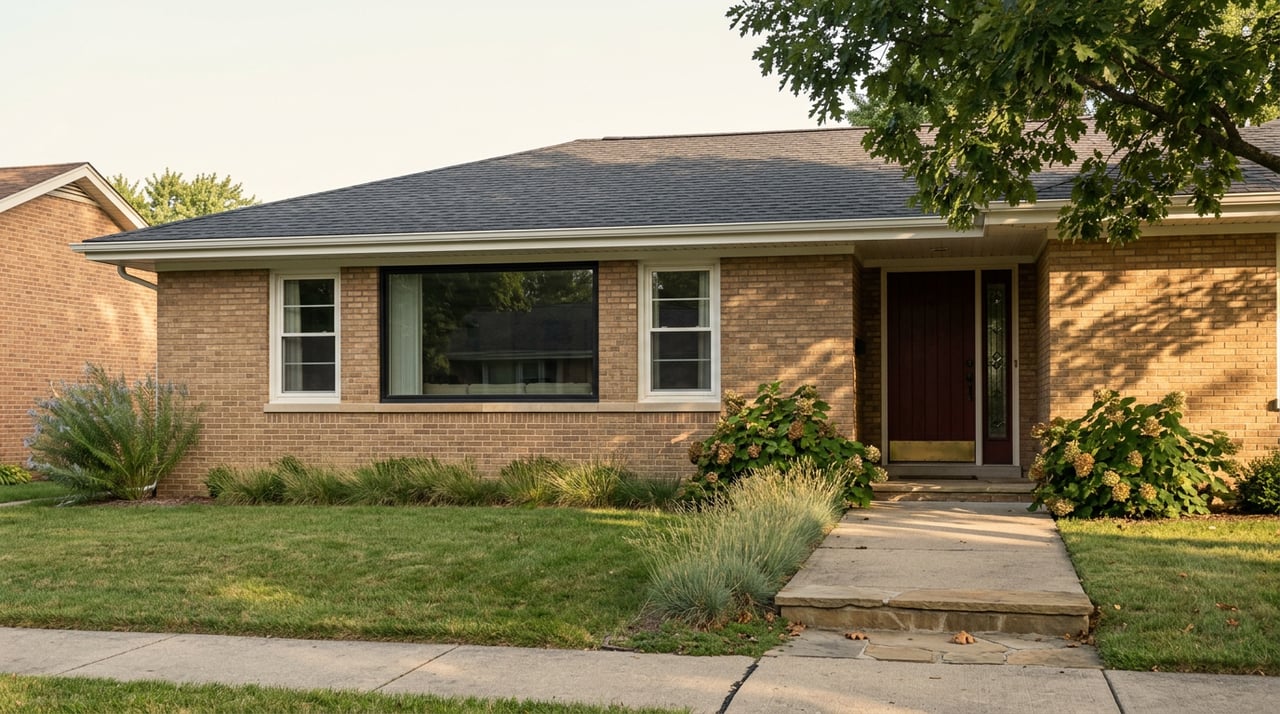
As the village puts it: "If you live in a single-family house in Homewood, chances are you live in the R-2 District." That district covers the original town site, the blocks closest to the train station and Ridge Road, with 50 to 60 foot wide lots running about 150 feet deep and homes typically between 1,000 and 2,000 square feet. Many of those subdivisions went up in the 1950s and 60s, though some houses date to the 1920s. This is Downtown Homewood in the Redfin sense: compact, walkable, and structurally smaller than the rest of the village.
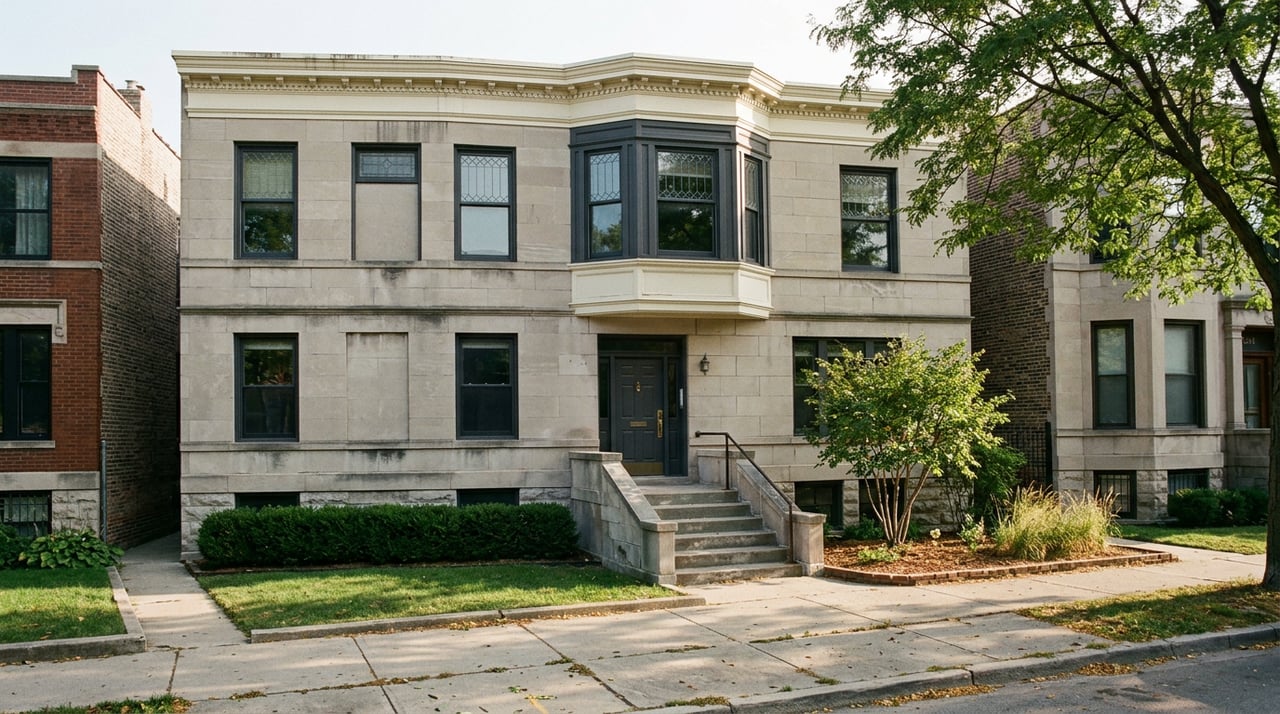
The R-1 district, concentrated on the west side, tells a different story. Those neighborhoods were built later, mostly between 1960 and 1980, on wider 60 to 80 foot lots (some running as deep as 300 feet) with homes ranging from just under 2,000 square feet to more than 3,000. A third district, R-3, is reserved for the traditional two-flats and three-flats strung along Dixie Highway north of downtown, a different housing type entirely.
| Zoning District | Typical Era Built | Typical Lot Width | Typical Home Size |
|---|---|---|---|
| R-2 (downtown core) | 1920s–1960s | 50–60 ft | 1,000–2,000 sq ft |
| R-1 (west side) | 1960s–1980s | 60–80 ft | 2,000–3,000+ sq ft |
| R-3 (Dixie Highway corridor) | Varies | N/A | Two-flat / three-flat |
Run those square footage ranges against the price-per-square-foot gap and the $48,000 median difference stops looking like a discount and starts looking like arithmetic. A 1,400 square foot R-2 cottage and a 2,600 square foot R-1 colonial were never going to land on the same median, even before you factor in age, updates, or lot depth.
If the R-2 core anchors the low end of Homewood's range, the Ravisloe subdivision anchors the high end, and its story explains why. Ravisloe was built out between 1946 and 1999 around the Ravisloe Country Club, a golf course and 1917 Spanish Revival clubhouse that drew wealthy Chicagoans out to Homewood as early as 1901, well before most of the rest of the village existed in its current form. Homes there currently list in the $329,000 to $385,000 range, with an average annual property tax near $8,400, and the subdivision has stayed a consistent draw for buyers who want a larger, more established lot without leaving the village.
At the opposite end, the village's two designated 55-plus communities give buyers a lower-maintenance entry point. The Garden At Homewood Place opens near $237,000, close to the downtown median but structured for single-level living rather than a starter cottage near the tracks. Older resale pockets like Old Homewood, Southgate, and Woodborough round out the middle of the range with a mix of vintage and updated inventory.
The point isn't that one part of Homewood is better than another. It's that "Homewood" as a search term flattens at least three distinct products, small-lot compact housing, larger-lot mid-century homes, and a golf-course-adjacent premium tier, into a single median that describes none of them precisely.
Here's the part a median price can't show, and the reason the gap is worth watching rather than just explaining away. Homewood just finished rebuilding the exact train station that sits at the center of the R-2 district. Amtrak completed a $15 million renovation of its facilities, and Metra separately carried out a $14 million rebuild of the platform and track-access tunnel, a combined $29 million investment completed across 2023 and 2024. The project restored the station's historic Mission Revival character while bringing it into ADA compliance and rebuilding the pedestrian tunnel underneath the tracks.
The village didn't stop at infrastructure. Its 2023 Downtown Master Plan defines the planning area with real precision: east from Park Avenue and Ravisloe Country Club, west to Gladville Avenue, north from 183rd Street, and south to the Dixie Highway rail viaduct, which is functionally the same footprint Redfin uses for "Downtown Homewood." The plan is explicit about wanting more residential density inside that footprint, built around the newly rebuilt transit hub. Community feedback sessions pushed for a grocery store downtown, more food and beverage options, and better pedestrian connections between the station, Martin Square, and Irwin Park, the kind of investment that typically precedes repricing in small-lot walkable cores near transit.
None of that has shown up in the median yet. The three-month window ending March 2026 still reflects the R-2 core as the cheapest way into Homewood, not the neighborhood the village is actively planning to reshape. That's the gap between what the data says today and what the planning documents say is coming, and it's exactly the kind of local mechanism a portal median will never surface on its own.
If you're pricing Homewood against Flossmoor or Olympia Fields using the village-wide median alone, you're implicitly comparing a blend of R-1 colonials and R-2 cottages to those suburbs' more uniform housing stock. Ask which zoning district a specific listing sits in before you compare it to anything else. A $200,000 listing near Ridge Road and a $200,000 listing on the west side aren't the same product even if the number on the sign matches.
If you're a buyer specifically drawn to the walkable downtown core, the current price-per-square-foot gap is real and it's tied to lot size and home age, not to some flaw in the neighborhood. Given the scale of the station investment and the village's own stated intent to add residential density there, that gap is worth evaluating now rather than after the next planning cycle moves it.
If you're selling in Ravisloe or one of the larger R-1 subdivisions, your comparable set should stay inside your zoning district. Pulling a village-wide median into a listing conversation understates what a larger lot and a bigger footprint are actually worth in this market.
Homewood's median price was never lying. It just never claimed to describe one neighborhood, and the village's own zoning map explains why.
If you're weighing a specific block, subdivision, or zoning district in Homewood and want a read on what a particular listing is actually worth against its true comparable set, Anthony Kirkland works this market block by block, not just by the village-wide number. Let's Connect.
Anthony Kirkland offers a steady, market-informed approach to real estate defined by consistency, clear communication, and strong local insight. Serving Chicago, Chicagoland, and Gary, Indiana, he provides focused guidance shaped by each market’s distinct conditions. His approach is strategic and responsive, centered on informed decision-making and strong results.

Anthony Kirkland
10916 S CICERO AVE OAK LAWN, IL 60453