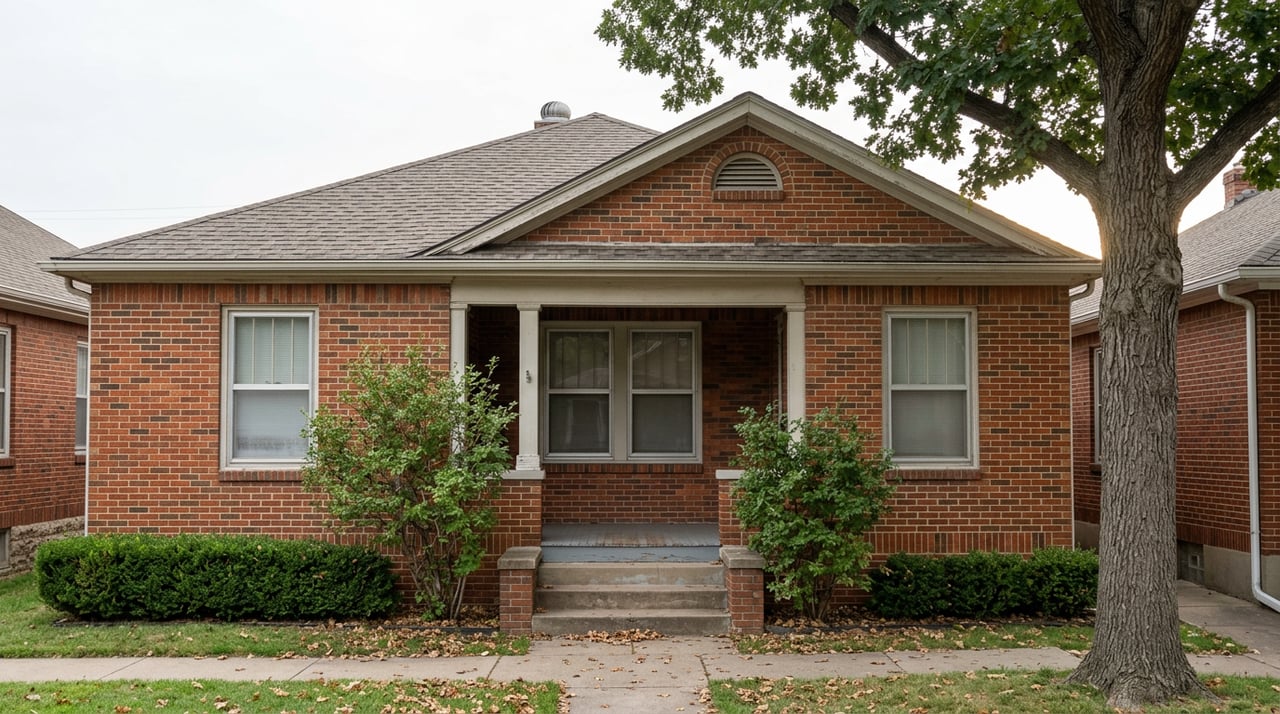
Kostner to Ogden: The Two Ends of a North Lawndale Saturday
September 10, 2026
September 10, 2026
By ten on a September Saturday, folding tables are going up in the parking lot at Bible Way Apostolic Faith Church on Kostner Avenue. A mile or so east, along Ogden Avenue, a bank teller is unlocking the doors at a Wintrust branch inside a building that didn't exist five years ago, and a barista at La Catedral Cafe is pulling the first shots of the day. Neither of these things would have been true in North Lawndale a few years back. Now they happen on the same morning, on opposite ends of the same neighborhood, and most residents only know about the one closer to their block.
That's the piece worth understanding this fall. North Lawndale has spent the last few years building two separate things at once: a resident-run food market on its west side and a $200 million mixed-income development along its Ogden Avenue spine. They were never designed to work together. But this season, for the first time, they're both operating at full capacity in the same weeks, and that changes what a Saturday here actually looks like.
The North Lawndale Community Farmers Market is back for another season, running every Saturday from noon to 4 p.m. through October 31 outside Bible Way Apostolic Faith Church at 1807 S. Kostner Ave. It's hosted by Community First Foundation, a Christian organization focused on chronic health conditions in communities of color, but the market itself has a more personal origin.
Its director, Michelle Scott, spent several years selling her vegan treats at the Austin Town Hall Farmers Market before deciding North Lawndale needed a market of its own. She launched it in 2024, and it's grown into a regular fixture on the neighborhood's west side, close to the K-Town blocks, drawing produce vendors, baked goods, and artisan sellers every week through the fall. Like the Austin market it grew out of, it accepts Link and SNAP, which matters for a market whose whole reason for existing is closing a food access gap that's been part of West Side life for decades.
None of that shows up if you only shop at Ogden Commons or only drive past Kostner on your way somewhere else. The market has built its own following on its own end of the neighborhood, and it will keep running weekly through the end of October before the season closes for winter.
Meanwhile, on the 2600 block of West Ogden Avenue, the buildout that's been years in the making is starting to fill with actual residents. The Junction at OC Living, a four-story, 75-unit building at 1312 S. Talman Ave, began leasing this spring. It's part of the broader Ogden Commons development from The Habitat Company and Sinai Chicago, and it's designed with a specific mix: 76 percent of its units are affordable, including 30 set aside for Chicago Housing Authority tenants, with the rest offered at market rate across studios through three-bedroom layouts.
The Junction isn't the first residential building on the site. That was The Boulevard at OC Living, a few blocks away at 1325 S. Washtenaw Ave, which was finished in 2024 and reached full occupancy in 2025. Together, the two buildings mark the point where Ogden Commons stops being a construction project and starts being a place where people actually live.
What's easy to miss is that the commercial side of Ogden Commons was already running before either building filled up. A 45,000-square-foot commercial building on the same site has been open for a while now, and it holds three things worth knowing about if you live nearby:
These weren't built to serve a hypothetical future population. They were open and staffed while the residential buildings around them were still half-empty. That's backward from how most developments work, where retail chases rooftops instead of the other way around. In North Lawndale, the bank and the clinic and the cafe got there first, and the neighbors are only now catching up to them.
A clinic and a bank branch sitting mostly unused for a year or two isn't a small thing. It means the neighborhood absorbed the cost of building out those services before there was full demand for them, on the bet that the housing would eventually fill in behind them. This spring, that bet started paying off. The Junction's leasing activity means more people are walking distance from a cafe, a bank, and a health clinic than at any point since Ogden Commons broke ground.
There's more coming. A third phase, called The Parkline at OC Living, is planned to add townhomes and multi-flat buildings with larger floor plans aimed at families, and Habitat and Sinai have targeted construction for later in 2026 or into 2027, depending on subsidy availability and market conditions. Once that phase is built, Ogden Commons is expected to top 350 mixed-income units altogether. For now, the story is simpler: the services showed up first, and this year the people are showing up to use them.
None of this means the two ends of North Lawndale have merged into one district. Kostner and Ogden are still a real distance apart, and the market has its own rhythm that has nothing to do with what's happening along Ogden Avenue. But this fall, for the first time, a resident can genuinely spend a Saturday doing both: produce and baked goods at the market before one, then a coffee and a bank errand on Ogden in the afternoon, without leaving the neighborhood for either one.
The market's season runs out at the end of October, so there's a real clock on that half of the equation. The Ogden Commons side isn't going anywhere, and if the leasing pace at The Junction holds, the corridor will look different again by the time Parkline breaks ground. Worth watching either way, and worth using while both are running at once.
If you're a North Lawndale neighbor curious about how a corridor like Ogden Avenue affects property values, financing, or timing for a future move, Anthony Kirkland has spent years working Chicago's West Side alongside Northwest Indiana and knows this stretch of the city block by block. Let's Connect if you ever want to talk through what any of this means for your own plans.
Anthony Kirkland offers a steady, market-informed approach to real estate defined by consistency, clear communication, and strong local insight. Serving Chicago, Chicagoland, and Gary, Indiana, he provides focused guidance shaped by each market’s distinct conditions. His approach is strategic and responsive, centered on informed decision-making and strong results.

Anthony Kirkland
10916 S CICERO AVE OAK LAWN, IL 60453