Selling a South Shore Condo in 2026: What the 22.1 Packet Actually Reprices
July 23, 2026
July 23, 2026
The portal shows a two-bedroom on East 71st Place listed at $139,000, on the market twenty-two days, one price cut. The buyer's attorney opens attorney review on a Tuesday. By Friday the deal is either intact or quietly $8,000 lighter, and the reason has almost nothing to do with the inspection report.
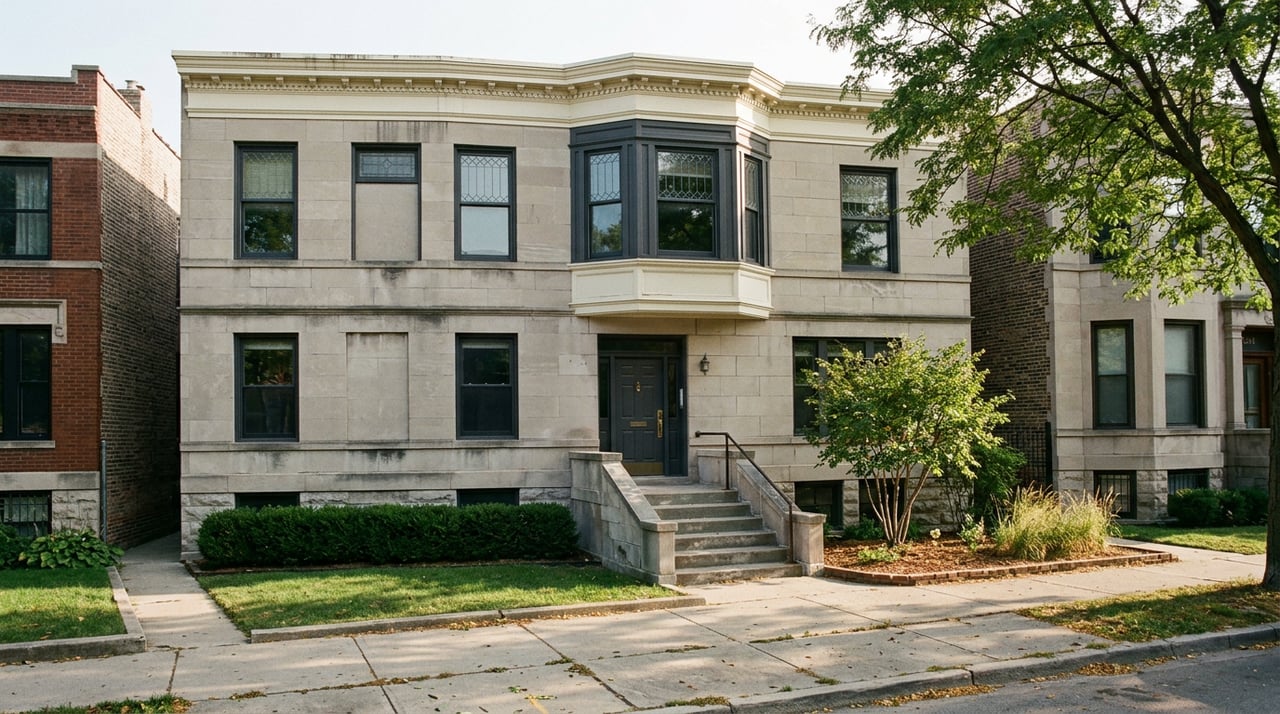
It has to do with a single packet of documents most sellers do not think about until they are already under contract. In South Shore, where the condo stock skews to pre-1940 courtyard buildings and lakefront mid-rises with real capital cycles behind them, that packet is where the price gets set a second time.
Illinois condo resales run on two separate disclosures, and treating either one as optional is where sellers lose leverage. The first is the Illinois Residential Real Property Disclosure form, a twenty-three-question form about known defects that every residential seller in the state has to deliver before the buyer is obligated to close. The second is the Section 22.1 packet from the association, and this one is condo-specific.
Section 22.1 of the Illinois Condominium Property Act, codified at 765 ILCS 605/22.1, requires the seller to obtain from the board and make available to the buyer, on demand, a defined list:
Items three, four, and six are where South Shore deals move. A vintage courtyard building with $34,000 in reserves and a masonry project quoted at $410,000 is not the same asset as its neighbor with $280,000 in reserves and a completed tuckpoint. The listing shows the same square footage. The 22.1 shows the difference.
South Shore's condo inventory is not generic Chicago condo inventory. The Redfin count showed 51 condos listed at a median of about $123K with 89 days on market as of mid-2026, and the composition of that inventory matters more than the median. Lake Terrace Condominiums and the mid- and high-rises along South Shore Drive sit next to a deep stock of pre-1940 courtyard and mid-rise buildings, several of which are architecturally significant enough to be in front of preservation panels right now.
In June 2026, the Chicago Sun-Times reported that the Illinois National Register Advisory Council was considering a multiple-property National Register nomination covering thousands of Chicago courtyard buildings, with Merrion Square in South Shore called out by name as a group of six Art Moderne buildings each wrapping a grassy court. That designation, if it lands, unlocks rehab tax credits that change the math on the exact kinds of masonry and envelope projects that drive assessments in these buildings. It does not remove the capital-project risk. It reshapes who bears it and how it gets funded.
The interpretation for a seller is straightforward. Two vintage buildings on the same block can present very different 22.1 packets: one with a recent reserve study, a funded roof cycle, and no anticipated capital lines, and one with deferred masonry and a board that has been talking about a special assessment for eighteen months without voting on it. Buyers with a competent attorney read for the second building. Sellers in the first building should be positioning the packet as part of the asking price, not letting it arrive as a surprise.
The statute itself contains a detail most sellers never notice until their attorney flags it. If the association has voted to waive some or all of the statutory reserve requirements, that fact must be disclosed in the 22.1 response in bold print. The full text of the Act is unambiguous about the typography.
A reserve waiver that appears anywhere in the packet in ordinary type is not a compliant disclosure. When it appears in bold, it is a signal that the building has chosen to run reserves below the level the statute contemplates, which pushes future capital projects toward special assessments rather than saved funds.
Buyers reading a bolded reserve-waiver line are not going to ignore it. They are going to ask their lender whether the building still qualifies for conventional financing, and the answer for smaller self-managed South Shore associations is sometimes no. That is the point where a $139,000 list price becomes a $128,000 cash offer, or the deal falls out and the property goes back on the market with a longer days-on-market count.
The 22.1 packet has a legal turnaround. Per the statute, the association has thirty days to produce the disclosures once the seller demands them in writing. The 2022 amendment to the Act also capped the fee an association can charge for producing the packet at $375, subject to CPI adjustment, with expedited-production fees allowed separately.
Sellers regularly wait until they are under contract to order the packet, then discover that a self-managed South Shore association with a volunteer treasurer needs the full thirty days. That eats the entire attorney review window. The buyer's attorney, with no packet to review, has two options: extend attorney review, or terminate. Neither is good for the seller. Extended reviews invite renegotiation. Terminations reset the listing history.
The sequencing move is to order the 22.1 packet the week the property is listed, not the week the contract is signed. The $375 is spent whether the first offer sticks or not. The alternative, in a market where South Shore condos already sit 89 days on average, is a longer sit and a weaker close.
The pattern that produces cleaner South Shore closings is short and non-negotiable:
Can I sell "as-is" and skip the disclosures? As-is language limits the seller's obligation to make repairs. It does not eliminate the obligation to complete either IRELA or the 22.1. The disclosures still have to be delivered on the timelines the statute and the contract require.
What happens if the association misses the thirty-day window? The seller is not off the hook, but the contract usually is. Most standard Chicago-area contracts tie attorney review and the delivery of ICPA documents to defined business-day windows shorter than thirty days, which is why ordering the packet at listing matters more than the statutory ceiling suggests.
Do buildings on the National Register nomination list get treated differently in a sale? Not at the closing table. The nomination the Illinois advisory council was considering in June 2026 affects rehab incentives and preservation review, not the resale disclosure process itself. A Merrion Square unit still closes on the same 22.1 mechanics as a mid-rise on South Shore Drive.
Is the $375 fee cap the whole cost of the packet? For the statutory items, yes, subject to CPI adjustments and separate expedited-processing fees allowed under the 2022 amendment. Lender questionnaires that go beyond the statute are a separate matter, and associations are not required by the Act to complete them, though most transactions do not close without them.
South Shore condo transactions are not won on the listing description. They are won on the packet the association hands the buyer's attorney, and on whether the seller understood what was in that packet before the first showing. If you are considering listing a unit in a vintage courtyard building, a lakefront mid-rise, or anywhere else in the neighborhood, the packet order is the first move, not the last one. Anthony Kirkland works through the 22.1 and IRELA sequence with sellers before listing so the disclosures arrive as evidence of a well-run building, not as a reason to reprice. Let's Connect.
Anthony Kirkland offers a steady, market-informed approach to real estate defined by consistency, clear communication, and strong local insight. Serving Chicago, Chicagoland, and Gary, Indiana, he provides focused guidance shaped by each market’s distinct conditions. His approach is strategic and responsive, centered on informed decision-making and strong results.

Anthony Kirkland
10916 S CICERO AVE OAK LAWN, IL 60453